
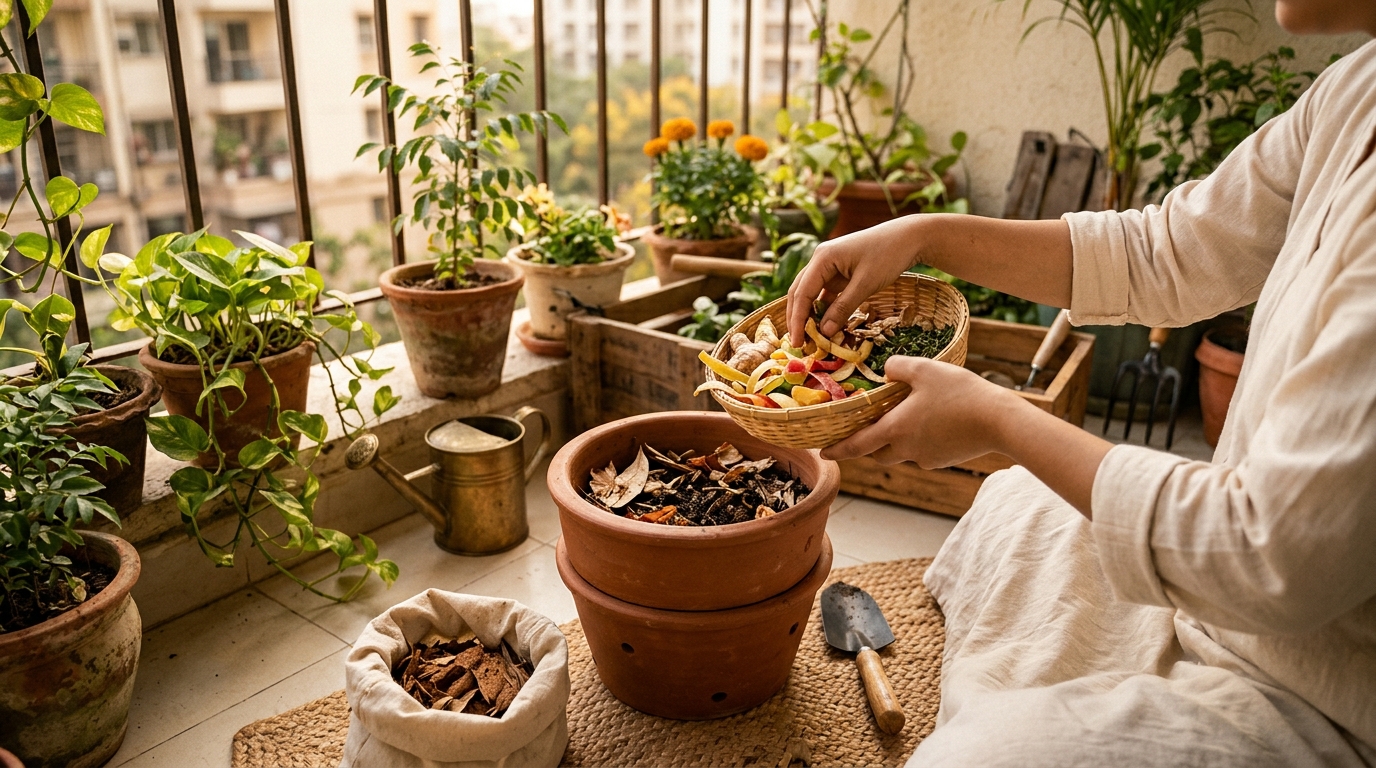
Composting turns kitchen scraps into black gold for your plants. Here is how to start, even in a flat.
What to compost
Fruit and veggie peels, coffee grounds, eggshells and dry leaves are all perfect. Avoid meat, dairy and oils.
Balcony-friendly options
No garden? A small countertop composter or a balcony bin with a tight lid works beautifully and stays odour-free when balanced correctly.
Why it matters
Food waste in landfills produces methane, a potent greenhouse gas. Composting keeps it out and feeds your soil instead.
Mastering the basics of composting at home allows you to divert daily food waste away from overflowing landfills and into nourishing earth for your plants. Even small apartments can support a simple setup, helping urban households embrace sustainable gardening habits with minimal effort. Mastering composting at home is a deeply rewarding way to connect with nature and dramatically reduce the amount of organic waste your household sends to municipal landfills. When food scraps decompose naturally in a well-managed bin or balcony composter, they break down into nutrient-rich humus that acts as a natural fertilizer for potted plants, window boxes, and home gardens. You do not need a sprawling backyard or expensive machinery to get started; a simple clay pot, a plastic bucket with ventilation holes, or a compact tumbler will do the job nicely. By layering your green materials like vegetable peelings and tea leaves with brown materials like dried leaves, cardboard shreds, and paper, you create the ideal balance for microbes to thrive without causing unpleasant odours. This ancient practice keeps valuable nutrients circulating right where they belong, rather than rotting away in mixed garbage heaps. Embracing organic waste management on your balcony or terrace is a powerful, hands-on step toward a truly circular, zero-waste lifestyle in the heart of the city.
Comments 0
No comments yet — be the first to share your thoughts!